
The Dojo Model
A working session for the people who run your training. Your managers and trainers learn to run a dojo on your team's real conversations: five to fifteen minutes on a concept, then everybody gets started, then progressions. Each of them runs one in front of me before I leave, and they run the next one without me.

The problem
Everybody knows the classroom does not work. Everybody keeps booking it.
Nobody here is stupid. The classroom is the only shape any of us was ever trained in, so when there is a budget line and a calendar slot, that is the shape it takes: somebody at the front, slides, a workbook, a good day. I say the same thing to enablement leaders on the phone, in these words: we book classroom training because it is what we are all used to, even though we all know it sucks. The room goes well. People say it was the best session they have been to. Then Monday shows up with its own agenda, and by the second week nothing about how anybody opens a call has changed. Your people did not quit on you, and it was not the content. A process names the steps. It does not give anyone a mental model for the conversation inside each step, and the conversion from the steps to the exact moves a person makes under pressure almost never happens, because these skills are more caught than taught. So the vocabulary lands and the behavior does not, and next spring somebody proposes a new methodology. Forrester counted that cycle: 89% of B2B sales enablement teams plan to launch a new sales methodology in the coming year, and their analyst added six words in writing: "they tell us this year after year." Sandler, on its own site: knowing the sales process "is not the same as following it under pressure." They are right, and they do not sell the thing that fixes it, because the only person who can install a skill in somebody's body is the manager sitting ten feet from them, and nobody ever taught that manager how to run a practice.
89%, "they tell us this year after year": Eric Zines, Principal Analyst, Forrester, August 23, 2022.
"Knowing the sales process is not the same as following it under pressure": Sandler Enabling Sales, January 9, 2026.
Per rep, per week. The coaching your manager actually delivers, about 8% of his workload, skewed to this quarter's deals rather than skill. Your methodology was handed to this person to install.
Sales Management Association, Research Brief: Supporting Sales Coaching, 2015.
Per rep, per month. The coaching dose the Challenger research found effective. Every methodology you have ever bought assumes this number and quotes you the other one.
Corporate Executive Board research, via Challenger Inc.
What happens instead
Stop teaching for two hours and start coaching.
Not sixty. Then everybody gets started, because you can only go as far as people can actually get the skill into their body.
Not a case study. Somebody runs it, the correction lands mid-sentence, they reposition and go again in the next breath. Reset. Reposition. Try it again. Do it this way.
The same drill with exactly one component added. Now one point per turn. Now open questions only. Now land the concept enablement built this quarter. The room coaches the room.
It comes out of twenty-plus years coaching debate, where nobody ever got better by being lectured at and everybody got better by going again. And it runs inside the hour your managers already hold on the calendar, which is why it is still happening in November.
What happens in the room
They do not watch me teach a dojo. They sit inside one, then they run one, and I coach the coach, which is the only version that transfers.
A slide about coaching has never produced a coach.
Usually a transcript, so people are talking before anybody is exposed.
Somebody always does. We choose one, get enough on the table to roleplay it honestly, and pick the right tool for it.
I play the other side and do not hand over the win until the move earns it. A whole call cannot be corrected; a segment can.
The room gives feedback. Then again.
The question every dojo closes on.
It is the reason most internal roleplay dies by week three. A progression adds one constraint and nothing else: one point per turn, open questions only, executive chess, the message marketing shipped last month. We build a ladder of them against your team's actual work, and I teach them to tell the difference between a room that needs a harder rung and a room that needs the same rung again.
I sit down and correct the coach instead of the rep. That is the uncomfortable hour and it is the one that transfers. We work the thing every new coach gets wrong, which is teaching for twenty minutes because the silence after five feels unbearable. And we spend real time on the part that is actually hard: a manager being willing to interrupt somebody he manages, in front of peers, and still be liked afterward. That is a skill too, and it is the one I spend the most time on.
Name the skills your team is actually graded on. Put a baseline next to every person. Set a target level per skill, with you, the manager, and me. Nobody needs a four in everything. Name it, baseline it, track it. Then the first four weeks of dojos go on the calendar with a group, a conversation, and a date next to each one, before anybody leaves the room. First dojos handle one or two conversations. Later ones handle three to five in the same hour.
What they leave with
What changes
Your managers leave having each run a dojo, with four weeks on the calendar. The hour they already hold starts changing how people open calls, and the training you already bought finally gets into the conversation.
What the room brings
Your managers, team leads, and internal coaches, the people who will actually hold the hour, and not the whole floor. Small enough that each of them runs one in front of me before I leave; about a dozen is the ceiling for a day. Each of them brings a real conversation coming up in the next two weeks, theirs or a rep's, and three or four recordings or transcripts of calls you thought should have moved and did not. If your recordings are in Gong or Fathom, that is the curriculum. Bring whatever methodology you already own. This does not replace it. It is how it gets into the conversation, which is the part that did not happen last time.
Formats
I run a dojo on your room, we take it apart at the board, and every manager runs a segment with me coaching from the side.
Everything above, plus every manager runs a full dojo with me coaching the coach, the progression ladder built on your named skills, and a baseline next to every name.
Why the training got recited, what a dojo is, and one live dojo on somebody's real call in front of the room. 75 to 90 minutes.
Priced per room means: tell me the date and the headcount.
Proof
Stories told in the room
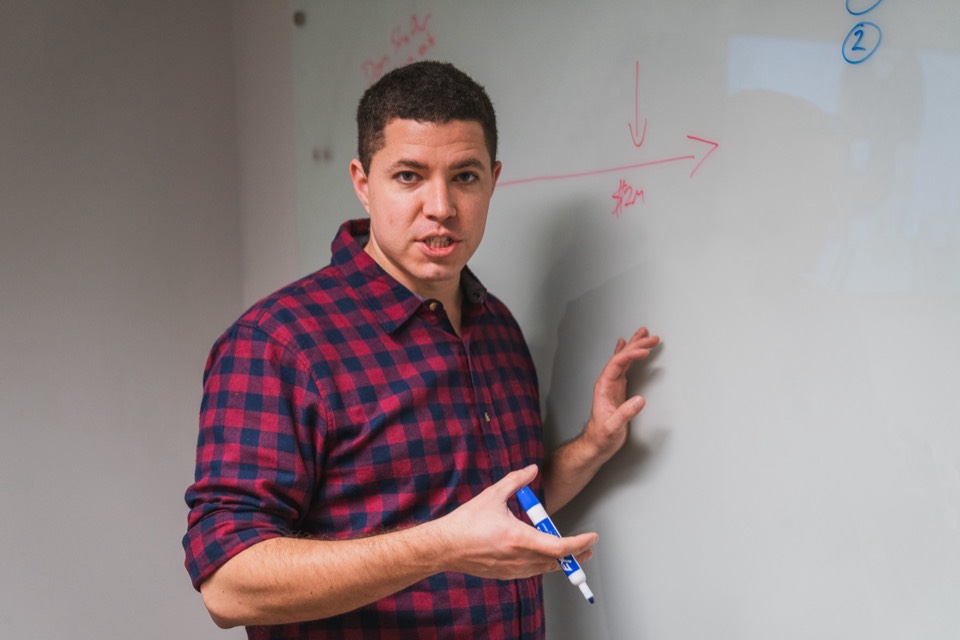
Who is in the room with you
Isaiah McPeak has coached 1,000+ professionals through their hardest conversations, from Fortune 500 sales teams to founders raising millions, and personally closed $35M+ in deals with these models.
Tell me who runs your training and what the last rollout was supposed to install. I reply inside a day with what I would run and which dates work.